
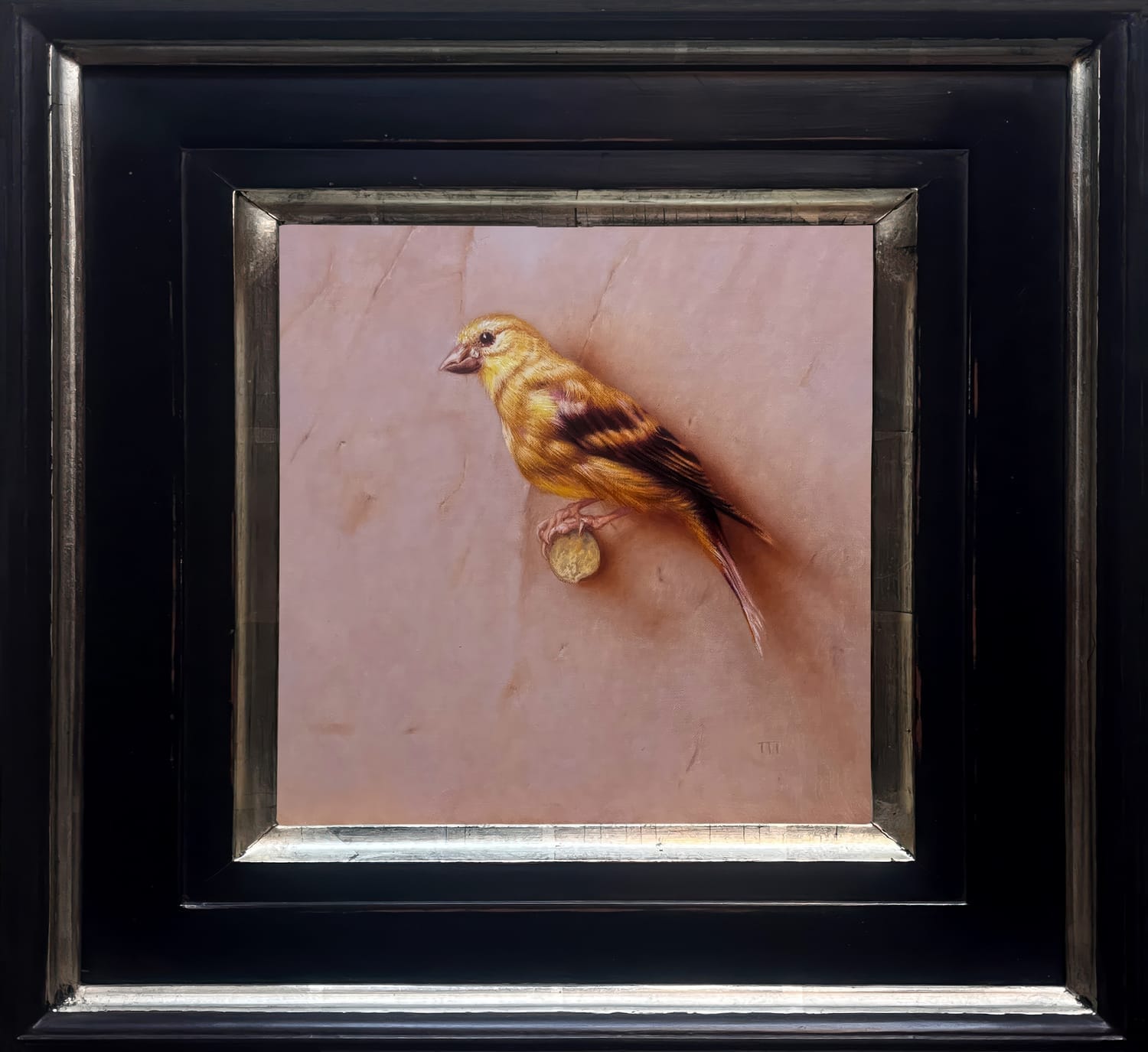
Élian's portrait, finished and framed.
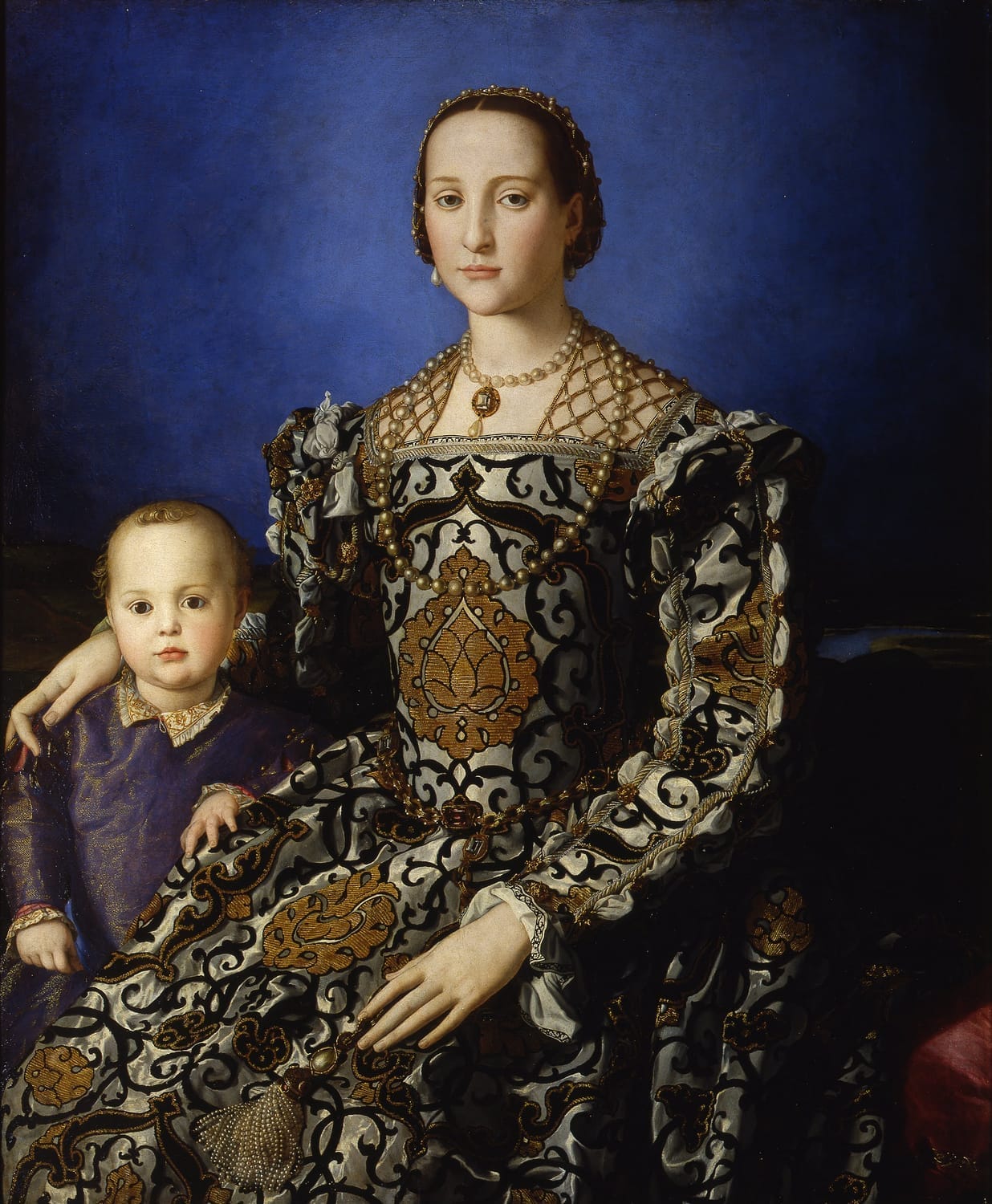
The Bronzino portrait of Eleonora di Toledo and her son, Giovanni that Élian was fascinated by. He still spends time with it whenever he comes for a visit.
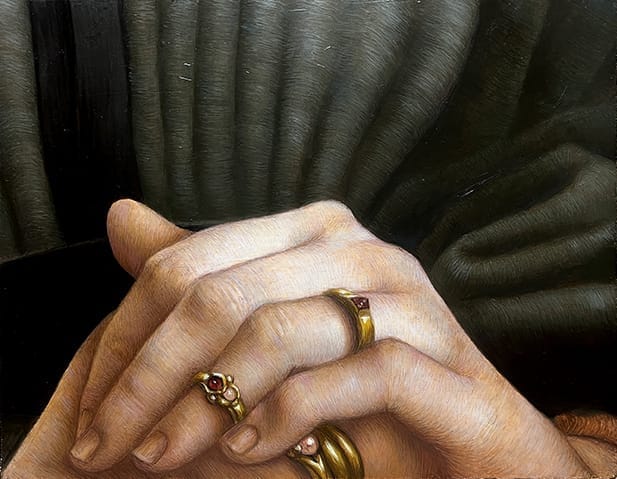
This is another piece that Élian and certain other birds seem to respond to as if they understand the concept of a devotional painting.
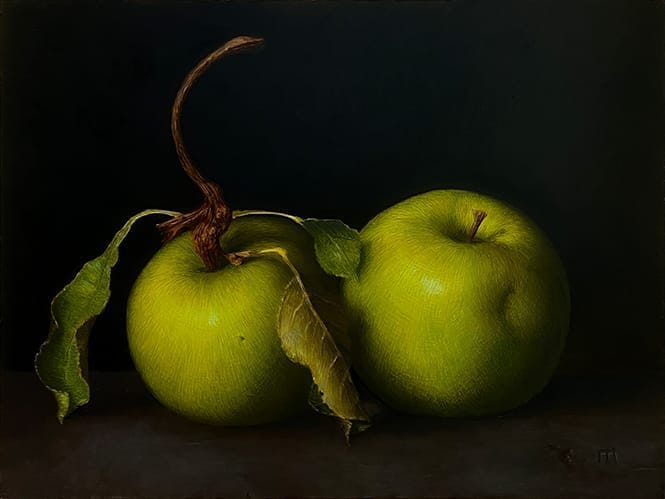
I was wrestling with this study of a Justin Wood still life when Élian came the first time. Justin's an amazing painter and kindly gave me permission to do this piece, which was way more difficult than it appears.
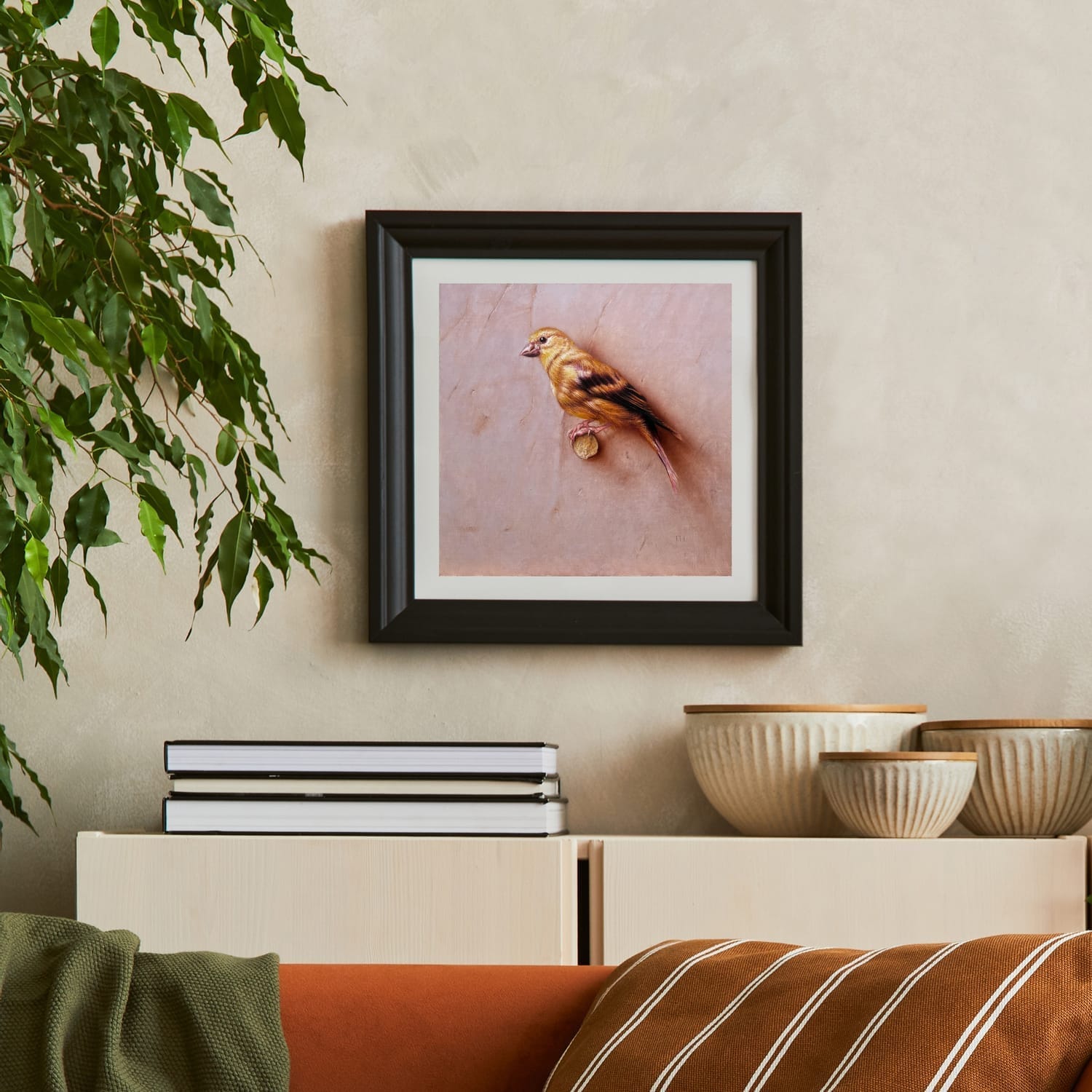
Prints of Élian, an American Goldfinch are available
Chapter 8 of Élian's Tale
The Zebra Finch Returns
Painter’s annotation: Some birds test the truth of a space the way we test the truth of a face—by returning to it. Not to be seen, but to see if it remembers them.
She returned in silence. Again.
This time, the light was different — later in the day, amber pulling across the floor, that soft warmth that makes shadows round and forgiving. I hadn’t been painting. I was simply standing, mixing a color I didn’t need.
I didn’t hear her come in. There was no flutter, no breath of wing. But I felt something shift. The kind of stillness that doesn’t feel empty.
She was already at the wall. Perched on the high peg again.
Not claiming it, not exploring — returning. As if this had been hers for longer than I knew. She hadn’t come for novelty. She came to see if the peg was still hers. If the light still fell the way she liked.
I said nothing. I stayed near the palette table, one hand resting lightly on the wood. She looked at me once — sharply, like punctuation again — and then away. She wasn’t here for me.
She scanned the studio.
Her gaze moved over the curtain, the canvas corner, the glass jar I’d refilled that morning with clean turpentine. She was noting what had changed. I could feel it.
She flew down. Landed once more on the brush jar rim. This time she didn’t pause. She stepped to the edge, then to the lid of the titanium white tube. She tapped it lightly with her beak — twice.
Then she looked up. I didn’t move.
I thought: She’s asking for something.
But it wasn’t a painting. Not yet.
She flew again. Darted to the flat file. Then to the easel’s crossbar. Then—finally—to the low stool I sometimes use when I’m not painting. She landed on the backrest, barely shifting its weight.
She waited.
I approached slowly. Sat down, careful not to disturb her rhythm. She remained still. Only her eye moved. Watching me watch her.
I sat there with her for what felt like a long time. Neither of us moved.
Then, without a sound, she dropped from the backrest, hovered, and landed on the sitting wall again—this time on a lower peg, one no bird had ever chosen.
It was closer to the plaster. Cracked. Unclean. A peg I’d meant to sand, or maybe remove.
She chose it.
And stared at the blank portion of the wall beside it. Not where I hang canvas. Not where I keep drawings.
Just a part of the wall.
And I understood.
She wasn’t waiting for me to draw her.
She wanted to know if I could imagine her without her asking.
Without pose. Without permission.
She wanted to know if I had already started.
And I had.
That evening, I opened a new sketchbook and marked a single page: “Zebra Finch, Unclaimed Peg.”
I drew not from memory, but from the shape she’d made in the air when she turned—not a portrait, but a trace. I didn’t try for accuracy. Just weight. Rhythm. The way her choice of peg had redrawn the wall itself.
I didn’t sign the page.
I don’t think she’d want me to.
45% OFF DECEMBER SALE | Discount Code DEC45 Has Been Applied To Your Current Visit

Bird Portrait Collections
Contact
Have a question, an issue with your order, or just want to say hello? My email is richard@richardmurdock.com
Read new Avian Chronicles stories by staying connected via our emails and social media.

Follow Me On Instagram

Follow Me On FaceBook

All Content © Copyright 2025