45% OFF JANUARY SALE | Discount Code JAN45 Has Been Applied To Your Current Visit

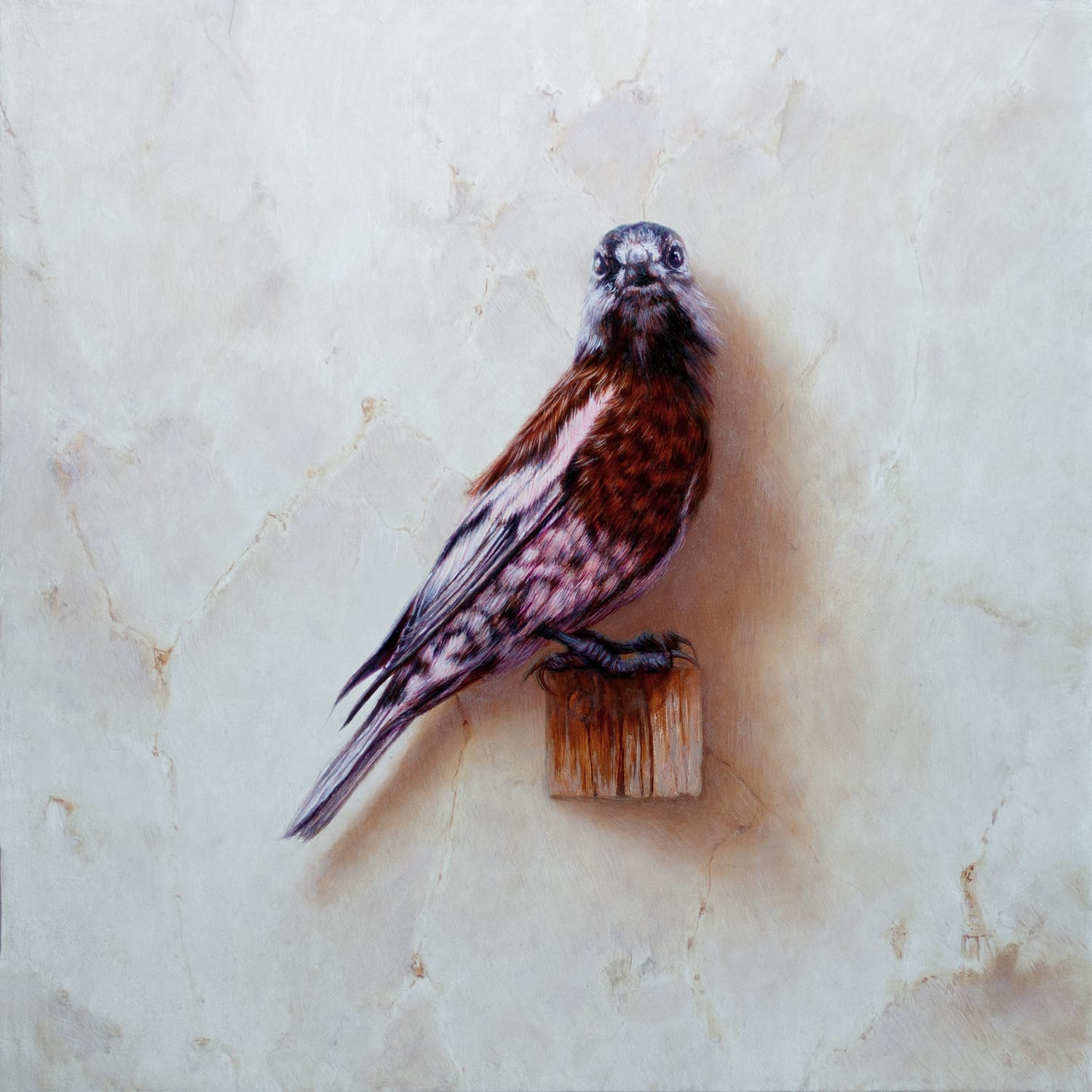
Élio's portrait, finished.
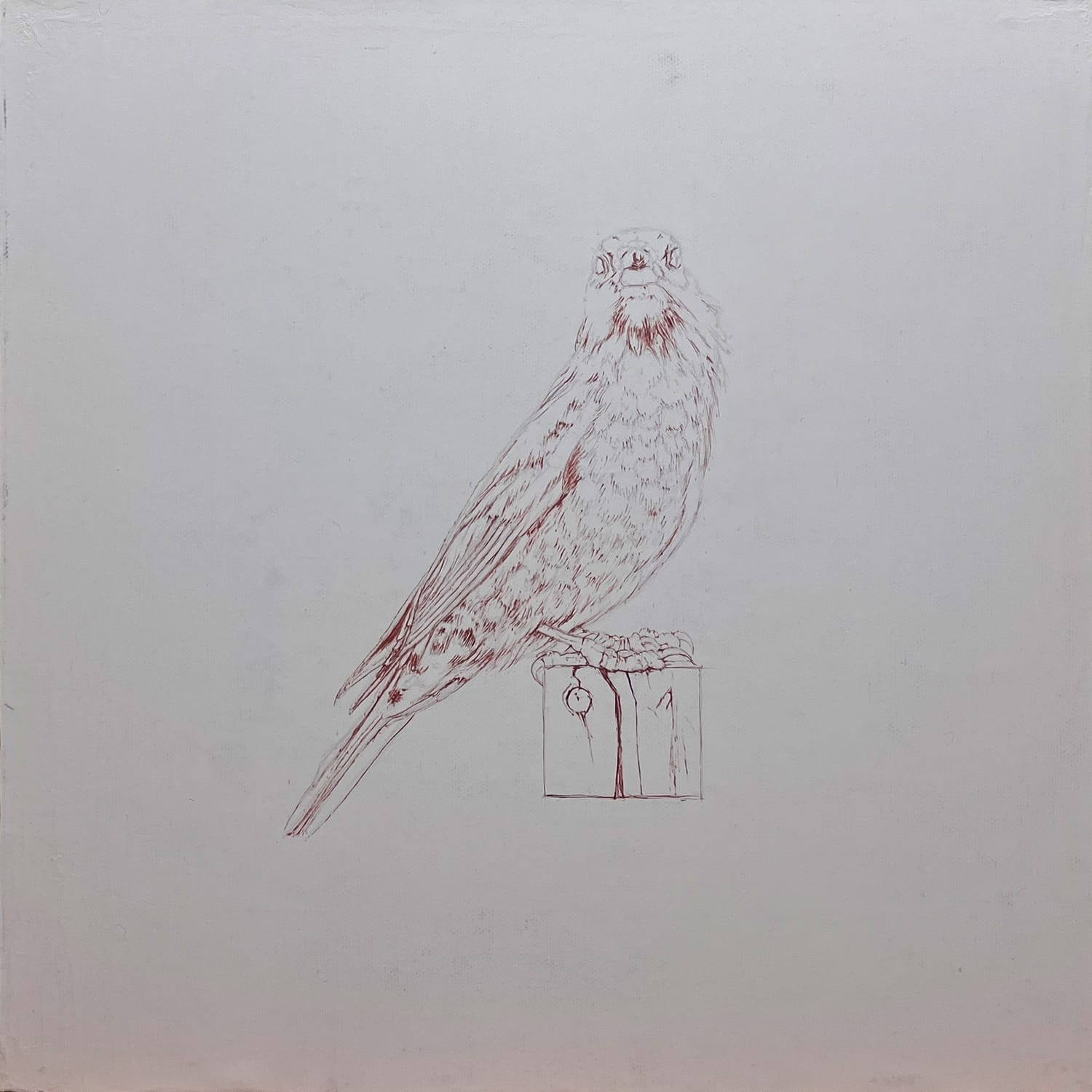
The first stage of Élio's portrait.
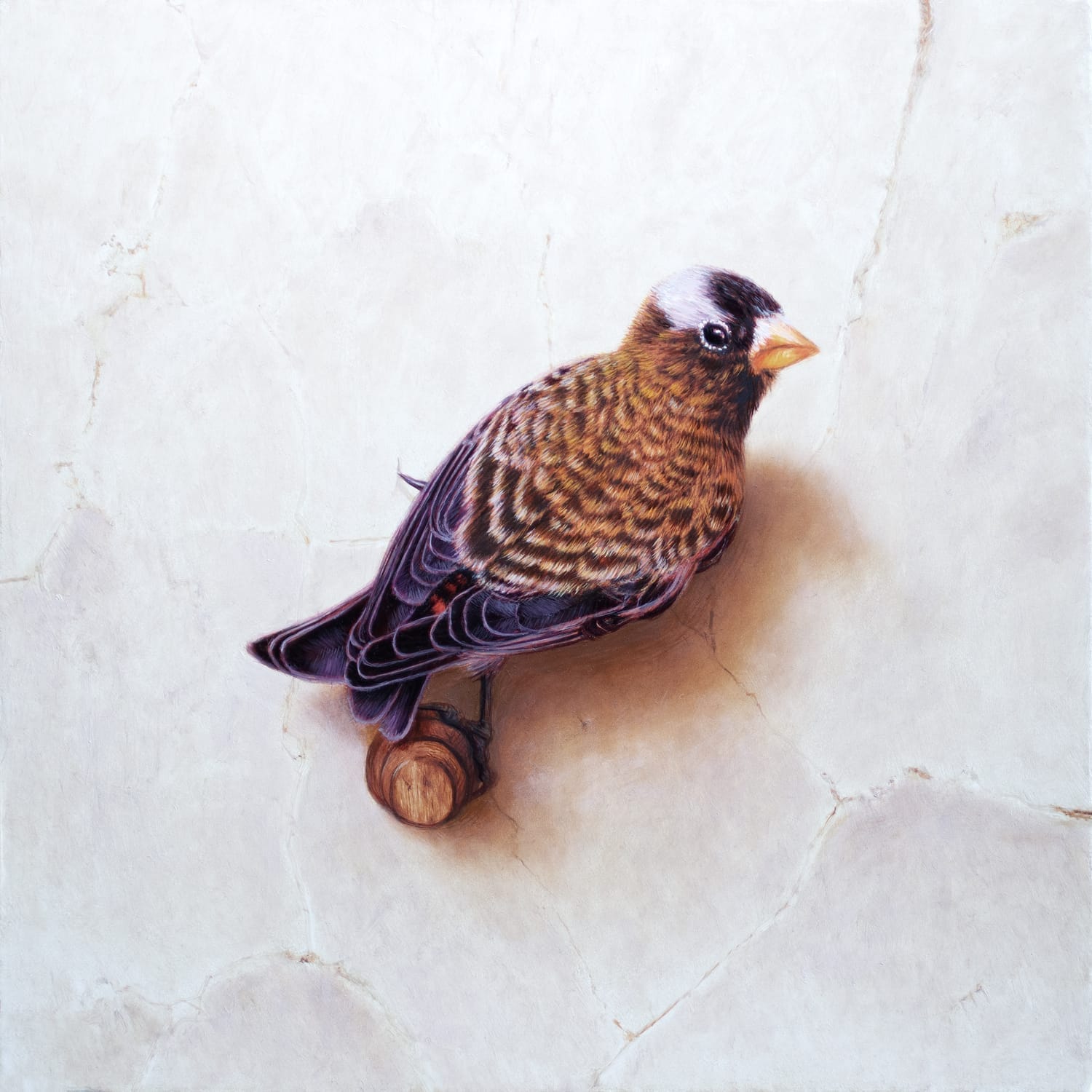
Simi's portrait, finished.
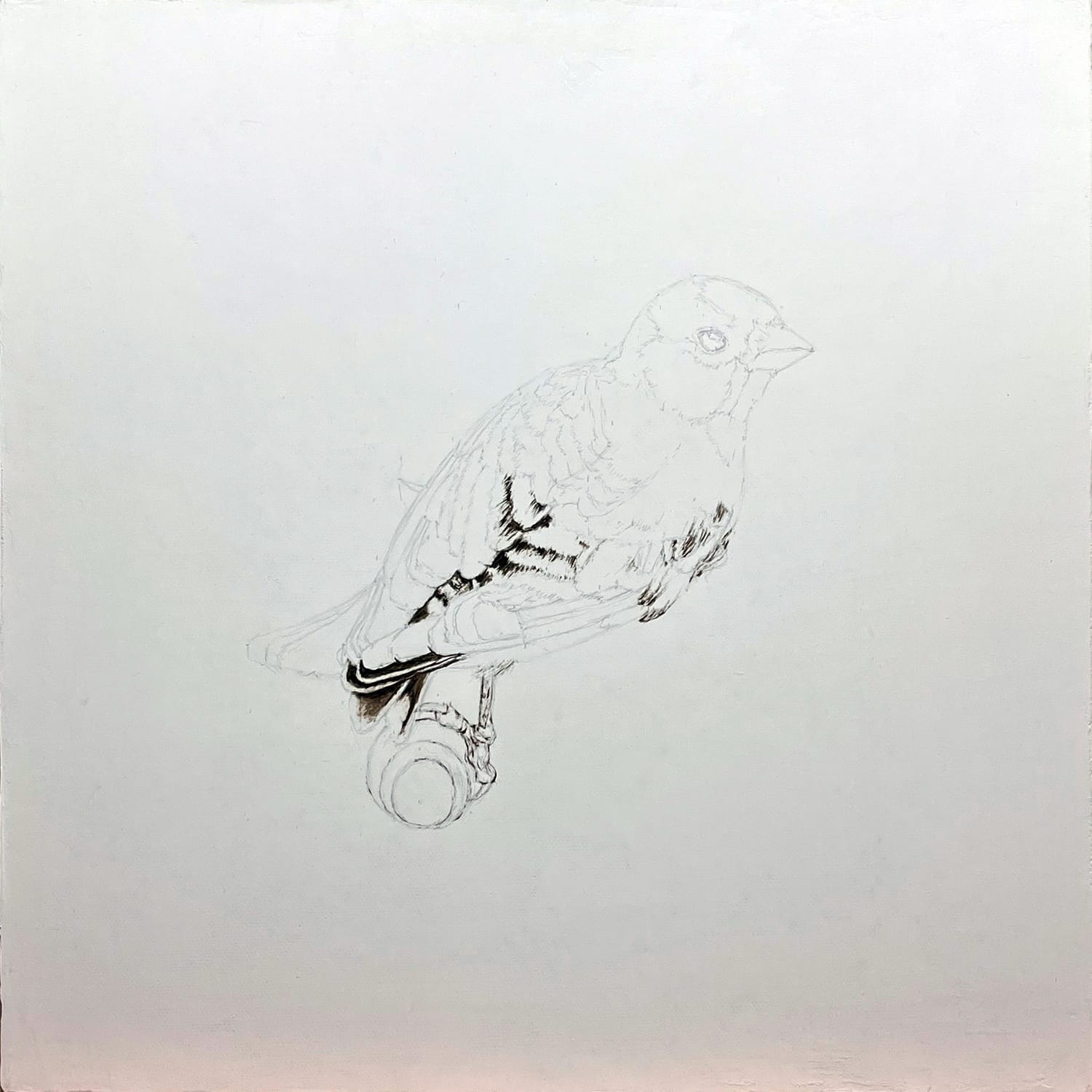
The first stage of Simi's portrait. It can be daunting to start new paintings because there's always so many aspects I want to develop.
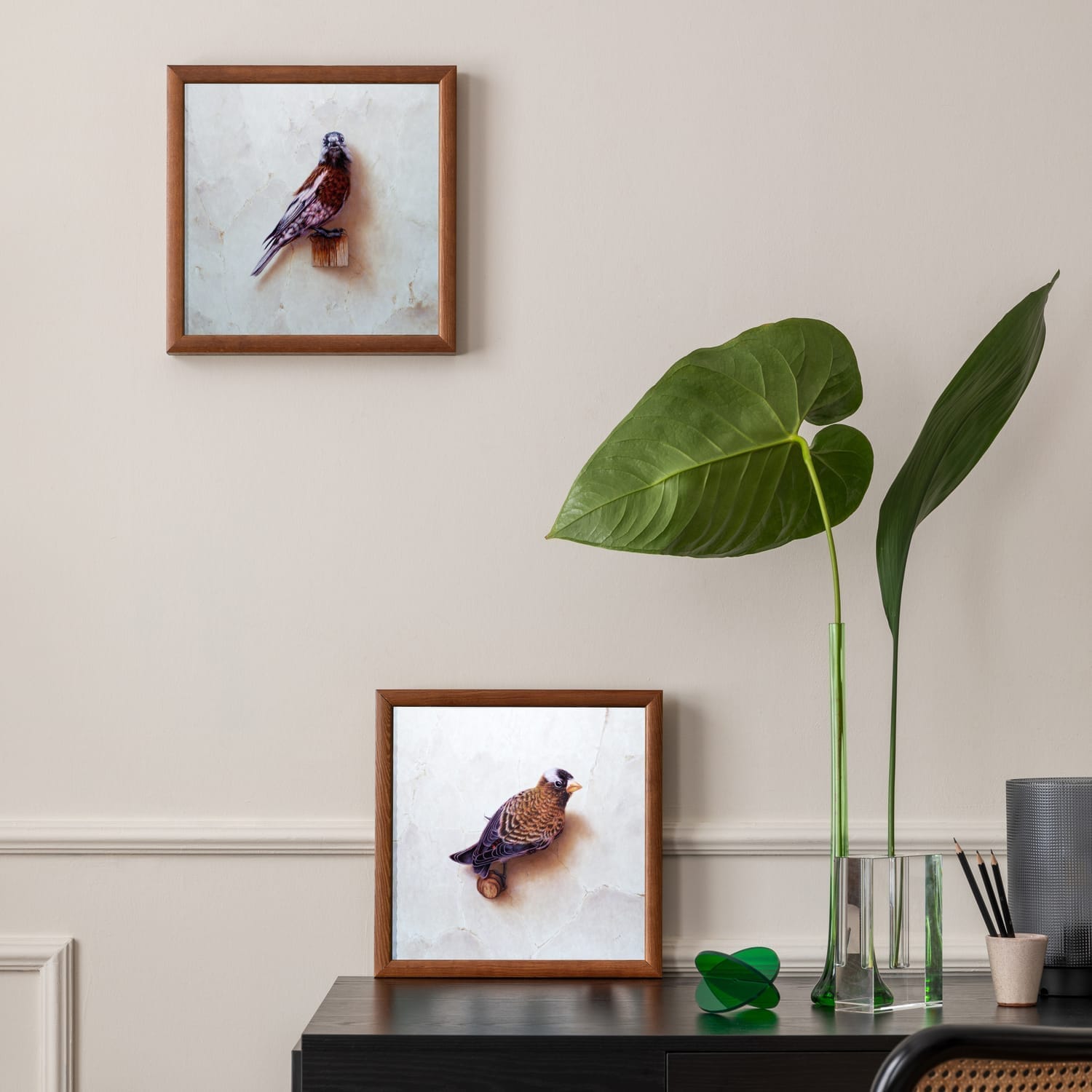
Simi and Élio, my Rosy Finch visitors, painted and framed in my playwright wife's office.
An Old Tale from Sima and Élio’s Mythos
The Tale of the Rosy-Crowned Hearts
In the high meadows, where spring and winter meet like old friends hesitating at a doorway, two finches make their home. Not what you’d call tiny things, really — small birds being like a whisper slipping past your lips — but crowned in petals of dusk-pink so vivid you’d swear some madder paint had dripped its last rose onto their wings.
I know their names are Sima and Élio, though the valley creatures seem to call them the Rosy-Crowned Hearts.
Each dawn they’d wake together in a nest woven of grass and moss, tucked into a gnarled juniper clinging to a cliff’s rim. One could still see the snow patches far below and the brave little wildflowers poking through. The finches would hop twig to twig, offering their duet to the waking world.
“Here we are… we’re alive… we still believe in morning.”
Short breaths of song, but somehow enough to stir the whole meadow. Day and nights passed in that gentle rhythm — gathering seeds, heads bobbing at noon, snuggling close when the light slid behind rocky peaks. Their love felt enormous, given their size: a fierce assurance that come storm or predator, they’d face it side by side.
Then came an autumn when a shadow swept in. A cold prince — eyes like frozen lakes, cries sharp as icicles — declared joy forbidden. Trees stiffened to marble; leaves turned to crystal; even the river forgot how to laugh. It was in the first frozen morning that Sima felt Élio’s small heart tremble next to hers. From their perch they peered down at a valley turned to silver stone, and knew escape meant losing everything they loved.
“If we fly away,” Élio whispered, breath plumes in the cold air, “we’ll lose this place — our home.”
Sima nodded, feathers rustling like a sigh. “We’ll stay. We’ll find warmth in our song.”
So, they sang. To the river, that it might remember laughter. To the trees, that their roots would soften. Each sunrise, their tiny notes wove through hush so clear that even the sleepiest deer might stir.
The prince heard them, of course. He sharpened an icy blade and flung it down, shattering frost shards near a granite boulder. A tremor rattled the finches’ little frames, but the silence lasted only a heartbeat. Then Sima ruffled her feathers, Élio trilled back, and their melody rose stronger, cutting through the frozen stillness like a knife of light.
Word reached the mountain — a giant forgotten by the world, riddled with ancient magic buried deep beneath its snow-capped crown. Days later, the earth itself seemed to breathe. Snow cracked, rivers rippled back to song, trees shivered and split their frost shells to reveal living wood. One oak exhaled a single green leaf, tentative but alive. And in that chorus of revival, the valley remembered itself.
The prince stormed down from his ice palace, sword raised, but the ground heaved into blossom at his feet—roses of dusk-pink unfurling through stone. His sword shattered; he staggered, robes falling away to reveal the vulnerability beneath his frosted guise. Sima and Élio watched from their branch, offering a final duet — a fragile promise that love, even in the tiniest hearts, can help to thaw the harshest curse.
The valley found balance: fierce winters and generous springs weaving together like threads. Wherever the Rosy-Crowned Hearts flew, petals drifted in their wake. Deer returned, fox kits tumbled through grass, hawks soared on winds scented with new bloom. And every morning, the finches sang — not from fear, but gratitude. Their anthem became the valley’s heartbeat, a reminder that love, once kindled, can never be snuffed.
Years later, travelers still speak of pink blossoms springing from rock or rivers laughing through last snows. They whisper of two tiny birds whose crowns outshone the darkest night, and how, if you listen at dawn, you’ll hear the softest two-part song, small as a breath but as fierce as a storm.
When the Rosy-Crowned Hearts First Came to Me
I’ll never forget how it happened. Not long after sunrise, I’d been fussing over a sketch of skies that weren't quite felt right. Then, a gentle tap-tap-tap at the studio window. I looked up and saw them: two small shapes, perched side by side, wing-edges glowing like first light on rose petals. I paused, brush mid-air.
I pushed up the sash slowly, and there they stood — Sima on the left, Élio on the right—bodies trembling a bit. (This was still new to me, that birds would come to my studio window and wait to be let in. Slow movement seemed appropriate.) Their eyes met mine, bright as embers. I couldn’t help but grin. They want their portraits painted, I realized, astonished and entirely honored.
I set up a small perch inside, on an old stick projecting from the plaster wall. Pulled out a new canvas-covered panel and my silverpoint and began drawing them. Being small, energetic and nervous birds made drawing a challenge, and silverpoint is not erasable. To say that it wasn't the most productive session would be an understatement.
Finally I mimed them posing on two separate perches, hoping the distance would bring less chitting and more stillness. It worked.
The next morning they were back, rested and full of the joy of being studied. Close study is very different from looking. I was curious to see if the Rosy Finches were like other models I've worked with, including Élian, the first bird to come for a portrait. Knowing it would take them a while to settle, I began attempting to mix the soft pinks and red-purples on their wings. Not ones to be left out of something new the finches hopped onto the edge of my mixing table together, seemingly alarmed at the mixes on my palette. Then Sima gave a tiny chirp, and Élio hopped forward, puffing out his rosy underfeathers and giving me a simple, insistent look.
“Paint us.”
I knelt so we were eye-level. My hand actually shook a little. Never felt so alive painting before. I laid the first stroke: a gentle arc for Sima’s chest. Élio’s crown, a rosy gray so low in chroma it might have been a moon shadow. More forms took shape next, a crown of feathers against pale yellow-red plaster. They watched every sable-stroke whisper across canvas, tilting their heads as if approving each line.
When I lifted the brush, they hopped closer, feathers soft against the wood. Sima’s tiny foot tapped twice — tick tick — and Élio gave a soft trill. I laughed — startling them — more from joy than anything else. In that moment, I understood: this was more than a study. It was a pact between artist and heart. I had promised to see them, truly see them, and they had trusted me with their presences.
That morning, the studio felt brighter. And though I didn’t know it yet, inviting Sima and Élio to sit for portraits would open a door to countless stories, each one begun by two tiny birds daring to ask, with nothing but a crown of rose-pink hope.
45% OFF DECEMBER SALE | Discount Code DEC45 Has Been Applied To Your Current Visit

Bird Portrait Collections
Contact
Have a question, an issue with your order, or just want to say hello? My email is richard@richardmurdock.com
Read about new Avian Chronicles paintings and prints by connecting via email and social media.

Follow Me On Instagram

Follow Me On FaceBook

All Content © Copyright 2026
Lorem ipsum dolor sit amet, consectetur adipisicing elit. Autem dolore, alias, numquam enim ab voluptate id quam harum ducimus cupiditate similique quisquam et deserunt, recusandae.
Lorem ipsum dolor sit amet, consectetur adipisicing elit. Autem dolore, alias, numquam enim ab voluptate id quam harum ducimus cupiditate similique quisquam et deserunt, recusandae.
Lorem ipsum dolor sit amet, consectetur adipisicing elit. Autem dolore, alias, numquam enim ab voluptate id quam harum ducimus cupiditate similique quisquam et deserunt, recusandae.